| |

The Dougs travel from Lahore to Islamabad to Murree

20151118-pakistan-learning-tour-day7-2

In the morning we left Lahore and drove down the M2 Motorway towards Islamabad. The M2 Motorway between Lahore and Islamabad is a 6 lane divided highway, about 400 km long.

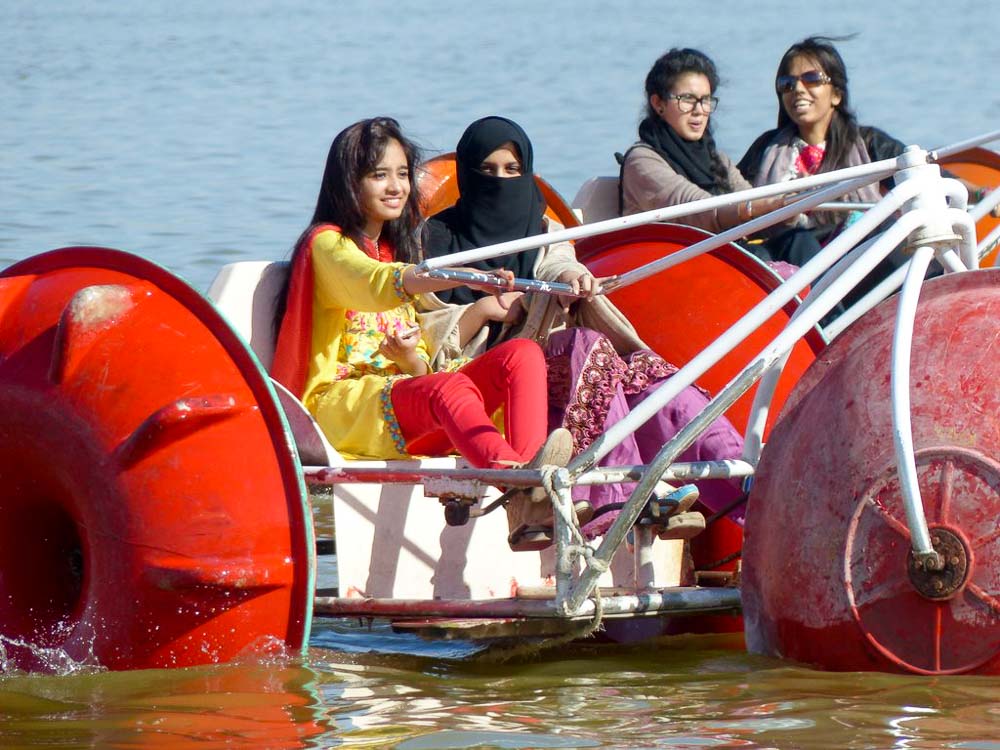
After about 2 hours of driving we stopped at Kallar Kahar, a lake near the Motorway. This is a stop for migratory birds from Siberia and a popular tourist spot for Pakistani people. We saw lots of school students out for the day on paddle boats, riding on the Ferris wheel and on a furry white camel. We took a motorboat ride and stopped to photograph some birds.
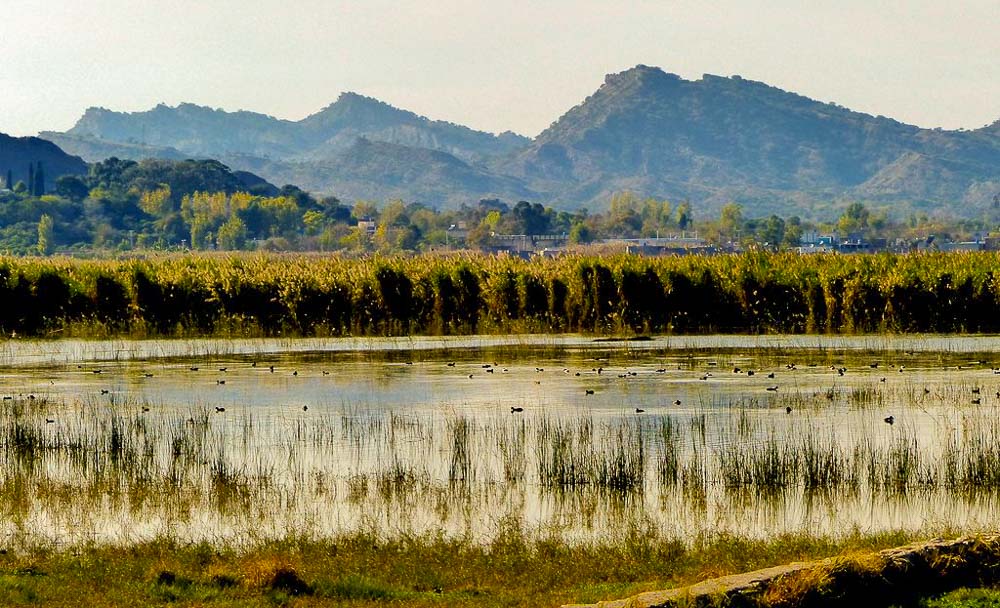
The lake called Kallar Kahar - home for migratory birds from Siberia in the winter.
The lake called Kallar Kahar – home for migratory birds from Siberia in the winter.
Bird drying feathers after diving in the lake called Kallar Kahar.
Little cormorant (Phalacrocorax niger) drying feathers after diving in the lake called Kallar Kahar.
School students enjoying paddle boats on the lake.
Ehsan, Doug, Yousaf and Afaq on our motorboat.
Would you like to ride on a white camel?
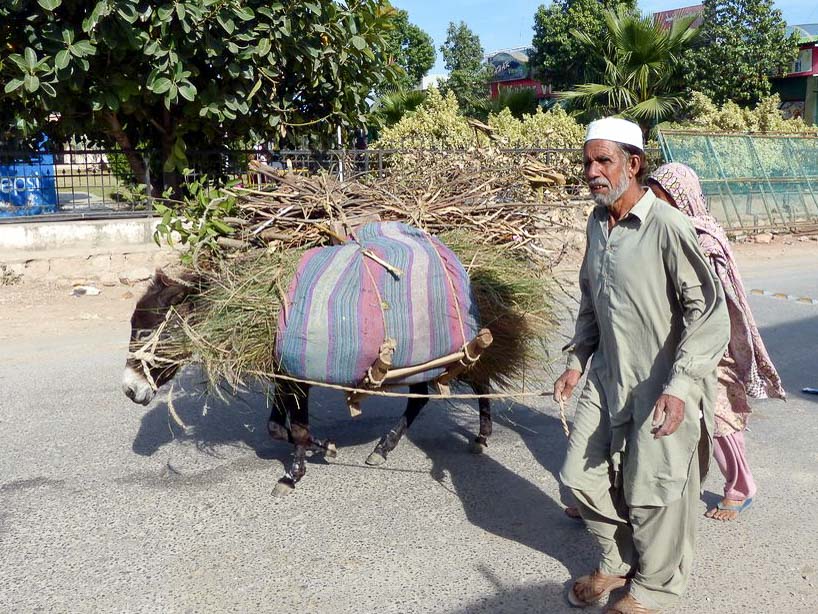
We stopped to try some aloo pakora (deep fried potato) and this donkey loaded down with hay and firewood walked by.
Yousaf is paying for our scrumptious aloo pakora.
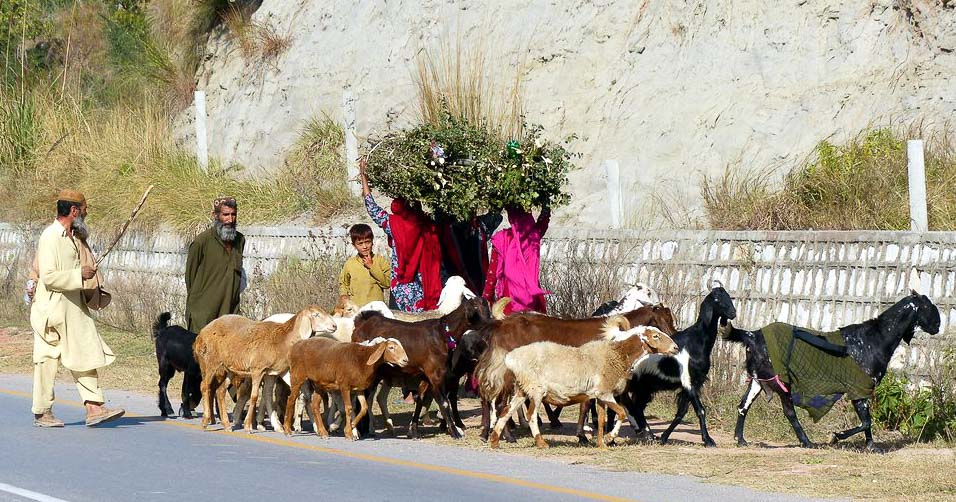
A small herd of goats passing 3 women with loads of fodder on their heads.
Long legged migratory bird at Kallar Kahar (can you identify?).
Black winged stilt (long legged migratory bird) at Kallar Kahar.
Some of these birds have already found their way into Bunyaad Tree of Life carpets.
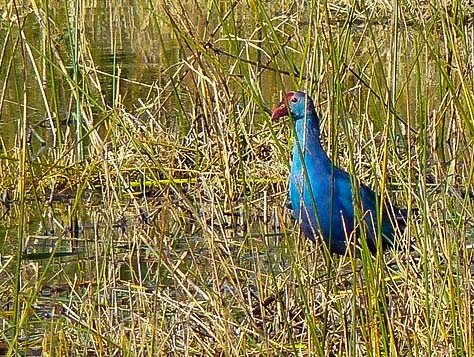
Purple moorhens (Jal-Kukri in local language). Some of these birds have already found their way into Bunyaad Tree of Life carpets. Maybe these ones will be featured on a future Persian Tree of Life.


Egrets and a small heron sunning themselves.
Egrets (Bagla in Urdu language) and a small pond heron sunning themselves.
Another bird like those above, searching for food in the marsh.
Another Purple moorhen like above, searching for food in the marsh.

We got back on the Motorway and reached Islamabad in the afternoon. After driving around on a sightseeing tour we stopped at the Faisal Mosque as the sun was setting.

Faisal Mosque in Islamabad.
Faisal Mosque in Islamabad. Islamabad was established as the capital of Pakistan in 1966 so all buildings in the city are modern, including Faisal Mosque, the national mosque of Pakistan.
Faisal Mosque.
Faisal Mosque.
Sunset in Islamabad.

Next we headed up a mountain just outside Islamabad to the hilltop Monal restaurant. There we enjoyed the magnificent view of Islamabad lights twinkling in the darkness 2,000 feet below us. We also enjoyed a great meal on the outside terrace overlooking the city.
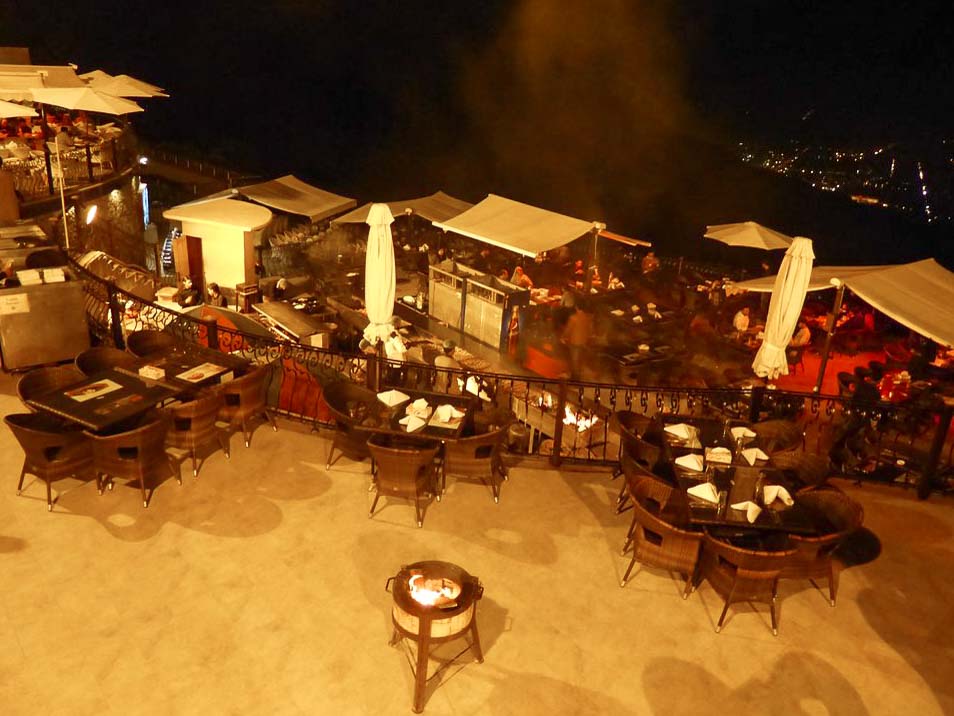
Monal restaurant overlooking Islamabad.
Monal restaurant overlooking Islamabad. Great food with a magnificent view.

Finally, we drove further up into the mountains to the hill station at Murree, elevation about 7,000 feet. We checked into the Maisonette Firhill, slurped down some chai and fell into bed.

Tomorrow we continue on to Jared to visit folks who are learning to make Persian carpets.

Stay tuned for Doug’s next trip post

We hope you’ve been enjoying the notes, experiences and photos and have been able to follow our adventures on the Bunyaad blog so far. Stay tuned for more.

Sign up to receive the next story in your inbox:

STAY IN THE LOOP: fair trade, rugs, sales & events.

Here is a link to all of the posts: Read Pakistan Learning Tour

Similar Posts

  • The Dougs are off to the Bunyaad office

    After enjoying a delicious breakfast of fried eggs, paratha and tea at the Chaman home we drove to the Bunyaad office and warehouse on Nicholson Road to meet the staff and learn more about rug making.

    Bunyaad office staff

    A royal reception was waiting for us when we entered the front door. We had greetings all around with the more than 20 staff people on hand. Doug Horst and I (Doug Dirks) were presented with a basket of gifts that included new Bunyaad mugs and new Bunyaad business cards for both of us.

  • |

    Hot Steaming Water Buffalo Milk served by Fauzia

    Fauzia steams milkWhen you come to any of our rug rooms and during all of our rug events across the US and Canada you get a glimpse into the world of rug making and see the artisans at work in the video “Introduction to Oriental Rugs” that is shown throughout the day. As staff I have watched this video hundreds of times. My work in the Bunyaad office also involves working with lots and lots of artisan photos. So when visiting Pakistan this year it felt almost surreal meeting these same artisans for the first time and yet feeling like I have known them for a long time.

    It is with great pleasure that I get to introduce two of these young women to you who have both been rug knotters with Bunyaad for the past eight years. Fauzia and Sofia live with their parents in the small village of Halwan about two hours north of Lahore. After finishing their schooling, they both started knotting rugs as this allowed them a good income and the ability to stay home with their parents.

  • |

    Bunyaad Learning Trip – Before Departure

    Female Bunyaad Rug Knotter

    On November 10, Doug Horst and I (Doug Dirks), from the Bunyaad office at Ten Thousand Villages in Ephrata, Pennsylvania, will fly to Pakistan to visit rug makers and learn about rug making. We will join Yousaf Chaman who traveled to Pakistan a week earlier.

    We are very much looking forward to this two week trip because we will meet rug makers and their families in their homes, right where Bunyaad rugs are created. This will help us to better understand how rugs are made, who makes them and under what circumstances they are made. We’ll get to visit and stay in rug making villages so we can soak up local culture and enjoy wonderful village hospitality. The food will be delicious and the conversations will be delightful.

  • Can you Balance an Egg on the First Day of Spring?

    Egg-Balance-Banner

    So it was the first day at the Ten Thousand Villages Rug Event in Harrisonburg, Virginia. I was staying at the manager’s house for the event. I came down ready to leave and saw Val Weaver intently concentrating with an egg on the kitchen counter.

    It’s a family tradition, she told me. Every year on the first day of spring her entire family, regardless of where they are, balance an egg and send photos boosting of their skills to the rest of the family. “Actually, every year my dad always buys a carton of eggs and gives them to the office staff so we can compete!” said Danielle, Val’s youngest daughter and a pro at egg balancing.

    I had never heard of this tradition but I was oddly touched by this Weaver family tradition, and the great fun that they have with it every year. So last year I sat down and tried it myself…

  • | | |

    Meeting with WFTO Asian

    Yousaf is explaining the rug making process to Christine and Elise of WFTO Asia.
    This morning Christine Gent and Elise Hawley from the World Fair Trade Organization (WFTO) Asia office in Chiang Mai, Thailand came to visit us at Bunyaad. Christine and Elise are in Pakistan to visit the one WFTO member in Pakistan (Habitat Integrated Pakistan (HIP)) and to possibly recruit new members.

    In the past, Christine has done product design and development work for Ten Thousand Villages in Haiti and Sri Lanka. She contacted us via her Villages connection hoping to find potential new WFTO members in Pakistan. We explained Bunyaad’s work to Christine and Elise and showed them around the building.

  • | |

    World Fair Trade Day – Why Should We Care, What Does it Mean for Us?

    bunyaad rug artisan family at the loom

    World Fair Trade Day (WFTD) recognizes and celebrates the impact of fair trade relationships around the world. The first World Fair Trade Day was established by the World Fair Trade Organization (WFTO) and celebrated on the second Saturday in May, 2002. Since then fair traders all over the world, including Fair Trade Federation (FTF) members, have celebrated WFTD on the second Saturday in May each year. This year, WFTD is on Saturday, May 9.

    Bunyaad is a recognized leader in fairly traded handmade rugs from Pakistan and we’ve been practicing fair trade since the 1960’s when Chaman Masih began working with just a few rug making families. Fair trade was not even part of the language back then. As time went along, Bunyaad joined forces with Ten Thousand Villages and the business of fairly traded rugs grew substantially. Just this year, Bunyaad became a member of the Fair Trade Federation and officially joined the North American and worldwide family of fair trade.

    So, why should we care about World Fair Trade Day? I think there are four main reasons:

One Comment

Comments are closed.