Nothing Like A Fresh Mango
It’s mango season here in Pakistan and there is nothing like a fresh mango. And nothing like a fresh mango lassi.

Lassis are made with fresh yogurt, milk and mango. Sweet from the fruit and full of probiotics from the yogurt, a mango lassi is the go-to drink to cool off in Pakistan’s hot summers. As the world’s fourth largest producer of mangos, Pakistan has no shortage of mangos when they are in season.

In Pakistan there are many types of mangos such as chaunsa, anwar lator, langara, dusehri and sindheri. Each mango has its own properties. “Pakistan grows over nine different types of mangos that all come into season at different times. Some are meatier, some juicer, some sweeter. In my estimation, the best ones come from Multan. Oh, I used to wait for those every year!” said Yousaf Chaman, Bunyaad director and native of Lahore, Pakistan.


But regardless of the mango you have access to, the process of making a mango lassi is the same. In general, you use a 60/40 ratio of yogurt to milk
Mango Lassi
- Two cups of plain yogurt
- ¾ cup milk
- 2-3 chopped mango, or ½ cup mango pulp
- Sugar to taste (depending on your taste and on the sweetness of the mango)
Blend in a blender. Traditionally, lassi is made in a terra cotta decanter and blended with a wooden mixer rolled between the palms of your hand.
To keep with the eating in season and within 100 miles of your home, a lassi can be made with many types of fruits: peach, apricot and strawberry just to name a few.
Which lassi is your favorite?

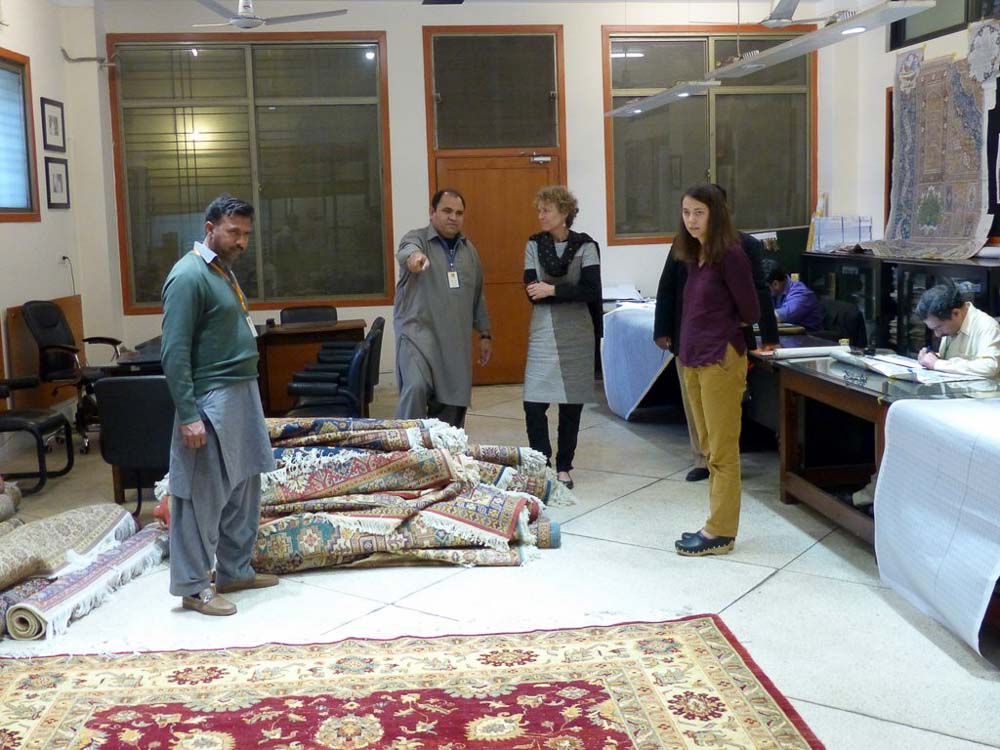
 Nothing tops sitting face to face with someone and getting to know them over a cup of tea. Three of our staffers (Jenni, Heike and Yousaf) along with Ten Thousand Villages Canada Rug Program Manager and Winnipeg store manager Gwen Repeta are currently traveling throughout Pakistan, meeting with rug artisans and seeing the fair trade difference in action. Where do we start first?