Fair Trade Rugs: Creating a More Just World

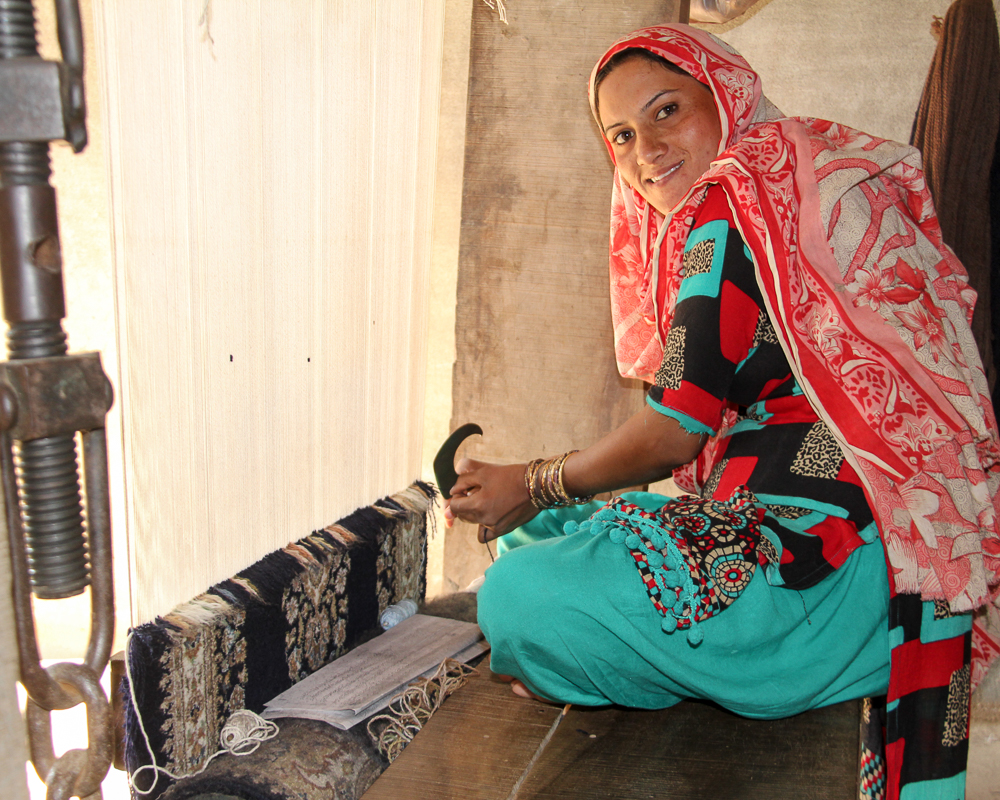
I sit beside Rafia Nasir on the loom where she works on a 6×9 Persian rug with her two sisters.
Rafia is a new mom, just like I am. She holds her nearly 8 month old little girl, letting her grab at the taut warp threads as she takes a break from her work. Rafia chuckles as I have to run and change my son’s diaper, tossing him down on her charpai, a rope bed, in the middle of her home and asking if she minds if I change him there. It’s my son’s first trip to the villages of Pakistan and at age 2, he’s taking it all in, including the chicken running into the house from the outside courtyard.
 Rafia tells me that she used to only work part-time, especially after her little girl arrived but recently, her husband lost his job at the wood mill due to extreme power outages and moved back to their family home in the village of Fateh Toor More, a remote village very close to the Kashmir border. Now, her husband takes care of their daughter while Rafia works on the loom full-time.
“We hope the mill will open up again soon but until then, we’re not worried. I’m able to work full-time on the loom and make up much of his lost income.”
 Months later, her rug arrives from Pakistan and is ready to be sold to a North American customer. I show it in the pile many times, telling folks about the rug, about Rafia and about how fair trade works. And yet, I step back and wonder, was I able to transport my customer to Rafia’s side so that they can really understand the difference that fair trade makes?
Do you know that because she is able to make this rug on a loom inside her village home, Rafia has enough for her family to eat three proper meals a day, to warmly house her husband and daughter, to be planning for the future of sending her daughter to the nearby village school, and to be thinking about the next rug she and her sisters will produce together. It sounds so very simple and quite honestly, it is. Making a conscious effort to purchase fairly traded items is making a conscious decision that you want your economic dollar to work for change, to work for stability, and to work for peace.
All of this from just a rug.
 I know the Bunyaad rugs on my floors at home are so much more than gorgeous, unique, durable floor coverings (able to withstand everything my toddler, husband and elder poodle can dish out); they represent empowerment for women like Rafia and for me, that makes them all the more beautiful and all the more a vital part of my home décor.
When I see my rugs, I see Rafia holding her daughter, planning for the same hopeful future that I plan for my son. We are all working for our children to have a bright future and to live in a peace-filled world.
 Bunyaad rugs are sold year-round at Ten Thousand Villages stores in four locations (Ephrata, PA and Souderton, PA both in the US; Winnipeg, MB and Oakville, ON both in Canada). We also hold rug events in about 35 cities across the US and Canada. And never fear, if a rug event isn’t coming close to your home, you can always shop online at https://rugsearch.tenthousandvillages.com and view each and every rug that is in stock.


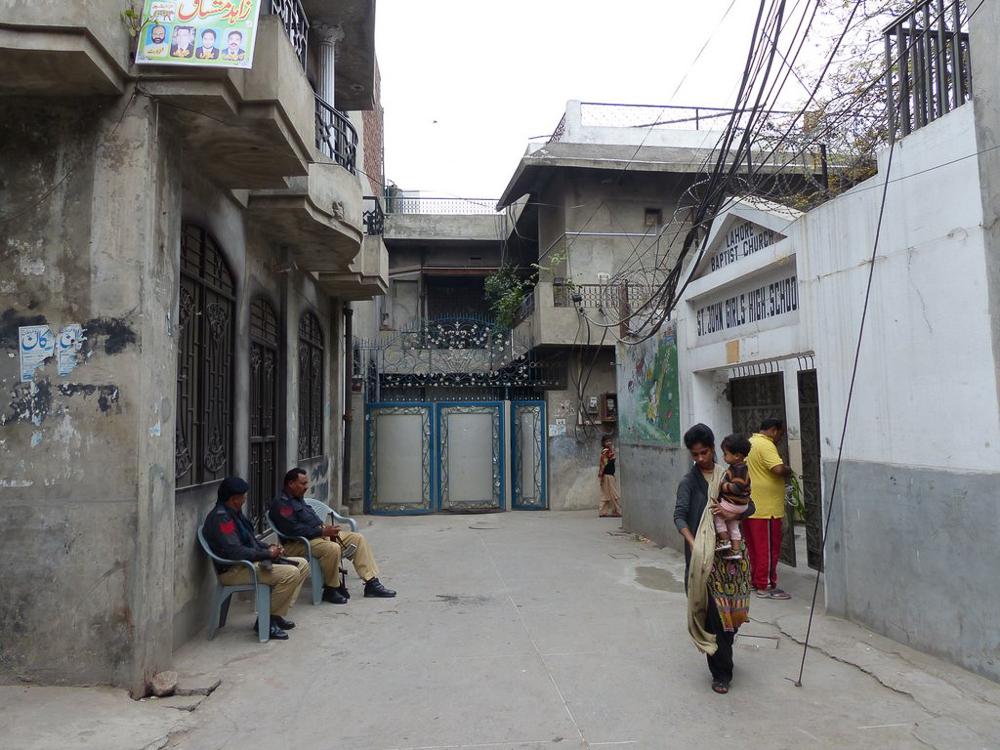 On Sunday morning we walked across the street to attend church at St. John’s Baptist Church. Chaman Masih, the founder of Bunyaad, is the founding and lead pastor. We met the associate Pastor, George Gil, as well. During the service Doug Horst and I (Doug Dirks) were introduced as guests from the USA and asked to say a few words. After church we got together with a few people at the Chaman home to visit. We ended talking about our religious origins and beliefs – interesting stuff.