

Cooking with Yousaf — Roghni Naan
Cooking with Yousaf — Lahori Roghni Naan
We’re looking forward to you joining Bunyaad director and chief chef Yousaf Chaman as he weaves stories of rug making, artisans’ lives and fair trade into his cooking. Cook along with him or just fill a glass and enjoy! Perfect hands-on time for the whole family.
Below is Yousaf’s Dadigee’s Lahori Roghni Naan recipe. Dadigee is grandmother (father’s mother) in Urdu, the national language of Pakistan.
“My grandmother would make this naan when we would visit and would cook it outside in the clay tandoor in her village courtyard,” said Yousaf. “And she would also serve it in a special basket that she herself wove. It’s these memories that warm my heart and I’m so glad I can share this recipe and bread making technique with you.”
Yousaf’s Dadigee’s Lahori Roghni Naan
- 6 cups/720g unbleached white flour
- 1 teaspoon/6g salt
- 6 tablespoons/85g butter, melted and at room temperature
- 1 1/2 cup/340g plain yogurt at room temperature
- 1 1/2 cup/375ml milk, lukewarm but not hot! (err on the side of too cool)
- 1 teaspoon/8g baking soda
- 2 teaspoons/8g baking powder
- 2 tablespoon/19g yeast
- 2 tablespoons/25g sugar
You will also need these items but they do NOT go into the dough:
- 1 cup/142g sesame seeds (most traditional but optional) for topping the formed naan with
- 2 egg yolks mixed with four tablespoons water to brush naan before baking
- 1 stick/113g butter for rubbing on top of completed naan
Makes 8-10 naan. Once cooked, naan can be frozen and reheated later.
Making the Dough:
Please mix up your dough before we meet. It should be mixed up roughly 2 ½ hours before we meet as it will need about two hours to rise.
Mix your dry ingredients together (including the yeast) in a large mixing bowl or stand mixer.
First, Yousaf likes to add the plain yogurt to the dry ingredients and then the milk. Knead either by hand or in the stand mixer until it forms into a dough. Then and only then add the melted butter. Knead a bit longer until the butter has been nicely mixed in.
If doing by hand, knead mixture for about 10 minutes total (roughly 8 minutes before the butter, 2 minutes after). If doing by the stand mixer, knead with mixer on medium for 4-5 minutes total. Place in a slightly-greased bowl, cover with a tea towel and let rise for two hours. We like to warm up our oven just a bit (turn it on for 30 seconds and then turn it off ) and put the dough inside the oven to proof.
Making the Naan:
During our time together, Yousaf will walk you through how to make the naan. There are several steps involved so I just want to quickly list them so that you are prepared. Preheat oven to 425F/218C.
- Pull the dough out and quickly knead one last time. Shape into a long roll. Cut into 8-10 equal pieces. Each one will then be formed into a naan.
- Shape the naan with a rolling pin. You will be using both the rolling pin and your fingers to stretch it out.

- Press a pan in the middle of the naan. This will allow you to make the middle of the naan consistently thin while helping to form a slightly-raised edge. It is important that the center of the naan is quite thin.
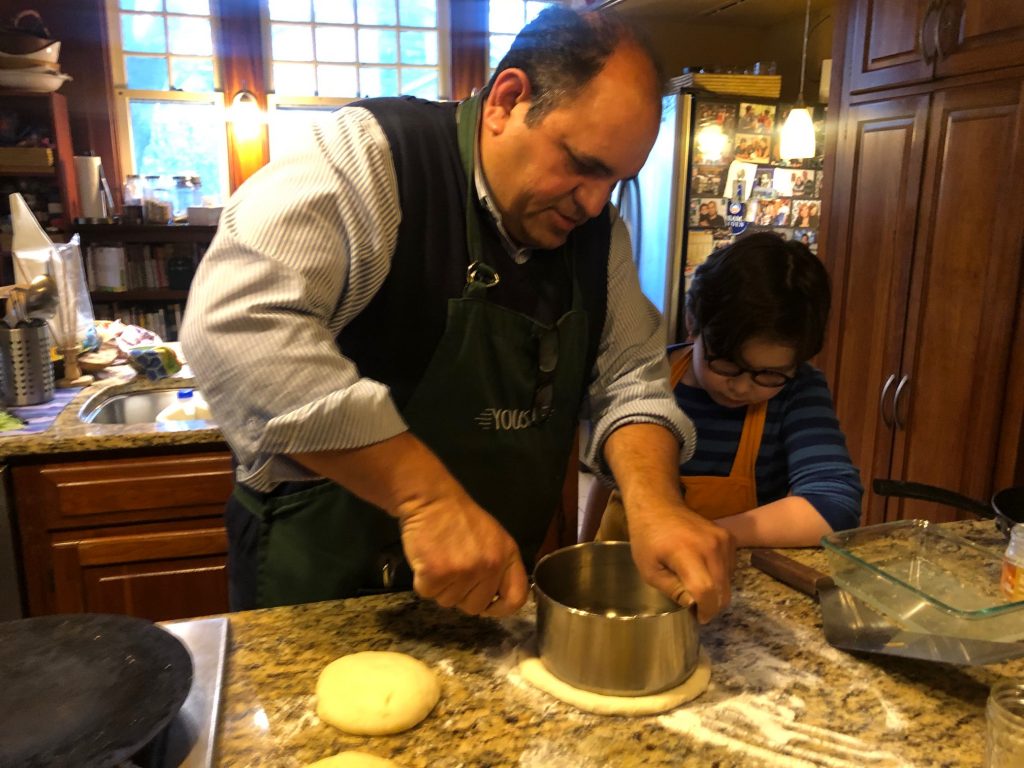
- Then use your fingers to make little ridges. Sprinkle with water and top with sesame seeds (optional but most traditional)

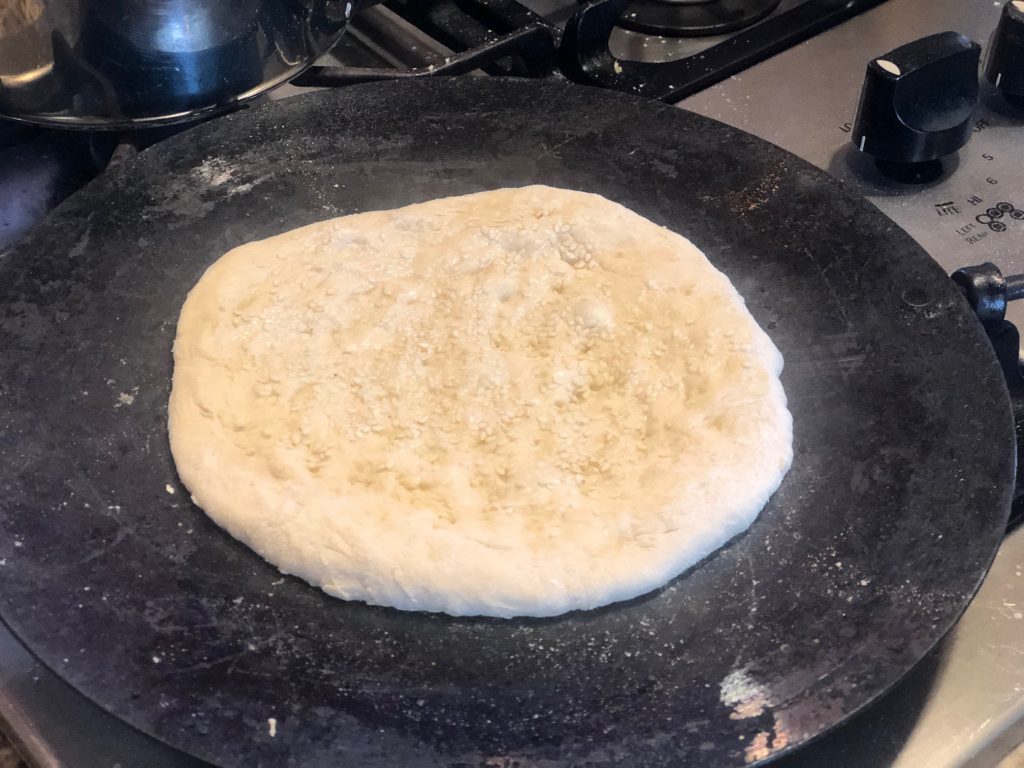
- Cook the naan on the stove-top using a fry pan (non-stick or cast iron or really anything) until the bottom just begins to brown a bit. A Pakistani would use a cast iron tawa. We normally keep our gas cook top burner at medium heat. If you have electric burners you may need to decrease heat.
- Brush the naan with egg yolk and bake in the oven (425F/218C) either directly on the rack or on a cookie sheet.
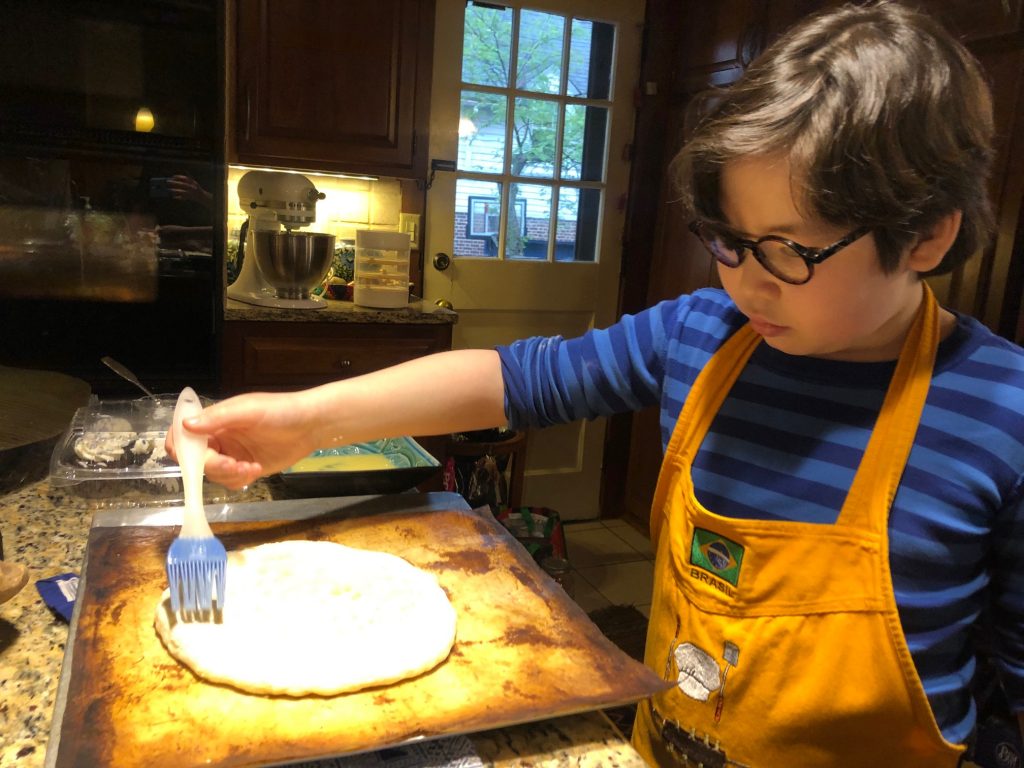
- Bake the naan in the oven for roughly 4-5 minutes, until golden brown. Brush finished naan with butter.


 As kids pack up their book bags and head back to school, we here in the Bunyaad Rug Room are also busy packing up as we head into our Fair Trade Rug Event fall season.


Thank you for sharing this jewel of a recipe. It brought back memories of the naans I had in Rajasthan, India (a border state) during my childhood trips. I can’t wait to try this recipe and make these with my kids.
so sorry I missed the presentation. I look forward to trying the recipe in my own kitchen. Thank you!
Thanks for sharing this lovely family tradition with us Yousef! My daughter and I are looking forward to learning how to make naan.
I’m so looking forward to this!!